
Car Insurance in France: Complete Guide for 2025
Car insurance is mandatory in France, even when a vehicle is not being driven.
- Third-Party Liability Insurance is the minimum legal requirement.
- The fine for driving without insurance can reach €3,750.
- The Insured Vehicles Register (FVA) allows real-time verification.
- A non-operational vehicle parked on public roads must still be insured.
- An accident without coverage exposes you to personal liability.
Coverage Types and Essential Guarantees
Choosing the right level of coverage is the first decision when insuring a vehicle in France. There are three main policy types, ranging from basic to comprehensive protection.
- Third-Party Liability Insurance (Responsabilité Civile): This is the minimum legal requirement. It covers only property damage and bodily injury caused to third parties. Compensation for injuries resulting from an accident can reach €2 million per claim.
- Third-Party Plus (Intermediate Coverage): In addition to liability coverage, this policy includes protection against theft, fire, and glass breakage. It is a good compromise for vehicles with moderate value.
- Comprehensive Insurance (Tous Risques): This full coverage policy protects your own vehicle, even if you are responsible for the accident or in cases of vandalism. It is generally recommended for newer or higher-value vehicles.
- Roadside Assistance and Replacement Vehicle: These services are often included in comprehensive policies. 24/7 assistance covers breakdown support and towing. A replacement vehicle may be provided while repairs are being carried out.
- Customization: You can tailor your policy to your needs. A driver with a 0.50 bonus coefficient (the lowest possible rating) will pay significantly less than a newly licensed driver. The vehicle’s value and your budget are the main factors when choosing a coverage level.
Legal Requirement for Car Insurance in France
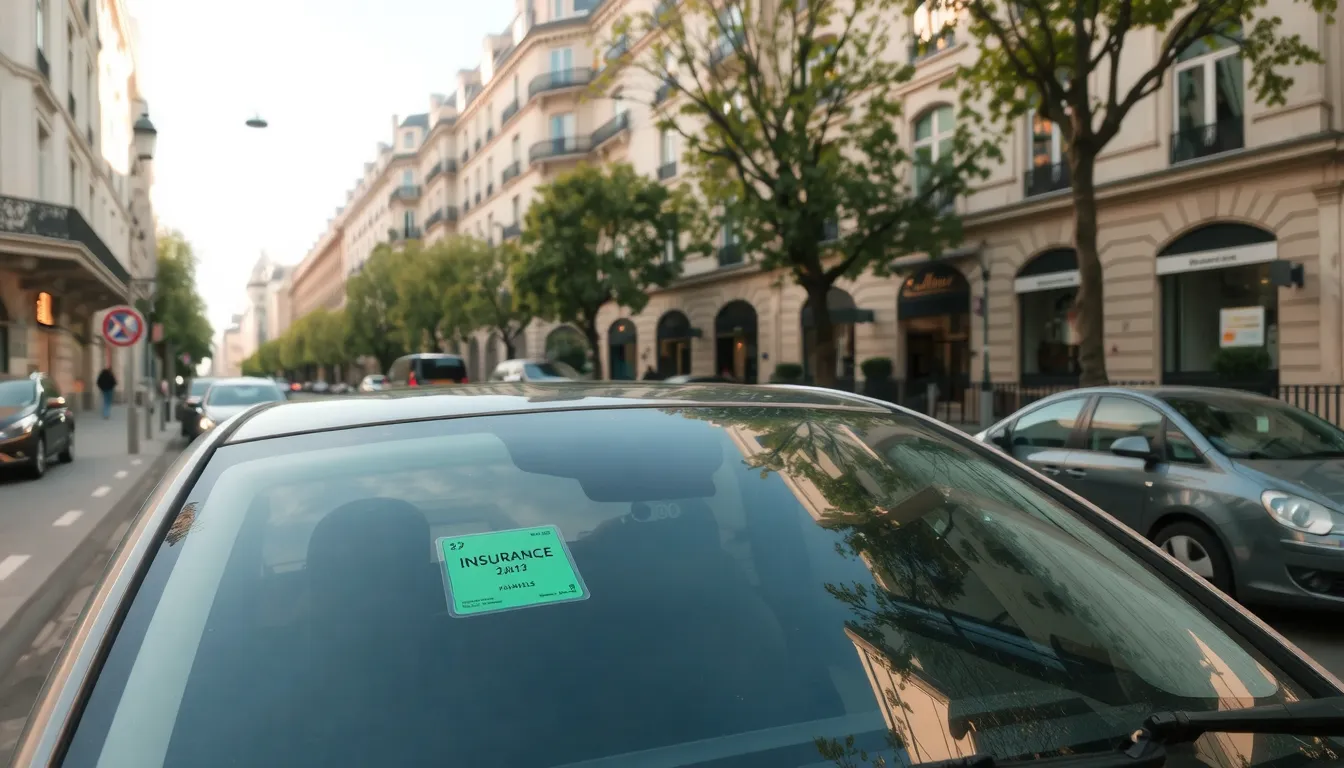
Since the law of February 27, 1958 (Article L211-1 of the French Insurance Code), every owner of a motor vehicle must carry third-party liability insurance. This minimum coverage compensates third parties for property damage and bodily injury, with limits that may reach €2 million for accident-related injuries.
Driving without insurance can result in a fine of up to €3,750 (Article L324-2), suspension of your driver’s license for up to 3 years, and even vehicle confiscation. The Insured Vehicles Register (FVA) enables law enforcement authorities to verify the validity of insurance policies in real time.
Even a non-operational vehicle parked on a public road must remain insured. In the event of an accident without coverage, you may be held personally liable for all resulting damages.
Car Insurance Costs and How the Bonus-Malus System Works
| Driver Profile | Estimated Annual Premium | Average Bonus-Malus Coefficient |
|---|---|---|
| Young Driver | €800 – €1,200 | 1.00 (starting coefficient) |
| New Arrival in France | €500 – €750 | 1.00 (no local driving history) |
| Experienced Driver (13-Year Bonus) | €350 – €450 | 0.50 (minimum coefficient) |
| High-Risk Driver (Recent Claims) | €1,500 – €2,500 | 1.25 or more per at-fault accident |
The cost of car insurance in France ranges from approximately €13 to €150 per month, or €350 to more than €1,200 per year, depending on your profile and chosen coverage level. Pricing is largely determined by the bonus-malus system, established under Article A121-1 of the French Insurance Code. Each claim-free year reduces your coefficient by multiplying it by 0.95, lowering a coefficient of 1.00 to 0.95, then 0.90, and so on until the minimum coefficient of 0.50. Conversely, an at-fault accident increases the coefficient by 1.25, significantly raising premiums.
Three profiles clearly illustrate the system’s impact. A young driver with no driving history typically pays between €800 and €1,200 per year and starts with a coefficient of 1.00. An experienced driver who has maintained a clean record for 13 years can reach the minimum coefficient of 0.50, effectively cutting premiums in half. For a Renault Clio in an urban area, third-party insurance may cost between €350 and €450 per year. A new arrival in France rarely receives recognition for a foreign bonus record and usually starts again at 1.00, resulting in annual premiums of €500 to €750.
The choice between third-party and comprehensive insurance also depends on how long you intend to keep the vehicle. The break-even point is generally around 5 years: if you plan to own the vehicle for less than 5 years, comprehensive coverage is often worthwhile; beyond that, third-party coverage may be more cost-effective. An at-fault claim increases the coefficient to 1.25, and it generally takes 3 claim-free years to recover approximately 20% through the gradual restoration of your bonus. If your policy is canceled because of a poor claims history, specialist insurers such as SOS Malus offer coverage, although annual premiums often exceed €1,500. To control costs, compare quotes online: with around 24 active providers on the market, competition works in your favor.
Roadside Assistance and Breakdown Coverage
Services Included in Insurance Policies
- 24/7 roadside assistance: breakdown support and towing to the nearest garage.
- Replacement vehicle available: courtesy car during repairs, depending on policy terms.
- Compensation up to €2 million for accident-related bodily injury claims.
Third-Party Plus and Comprehensive policies generally include enhanced assistance services such as repatriation, accommodation expenses, and taxi transportation following an accident. Check the reimbursement limits for replacement vehicles, as coverage is often restricted to a limited number of days. Without this option, you may need to arrange and pay for transportation and roadside assistance yourself.
Procedure Following an Accident
The European Accident Statement (Constat Amiable) is essential. You must send it to your insurer within 5 business days (or 8 days for bodily injury claims). Clearly describe the circumstances, damages, and details of the other party involved. If you disagree with the facts presented, do not sign the report without noting your reservations. Your insurer will then assess liability and apply the bonus-malus coefficient: 0.95 for each claim-free year and 1.25 for each at-fault accident. If you are not responsible, compensation will cover repairs and may include a replacement vehicle if provided under your policy. Keep copies of the report and photographs of the accident scene to facilitate claim processing.
Comparison of Car Insurance Providers and Policy Cancellation (Hamon Law)
Best Insurers for Expatriates and Young Drivers
- Direct Assurance: excellent value for young drivers.
- Allianz International: accepts foreign no-claims bonus records from expatriates.
- AXA International: English-speaking customer service available.
- SOS Malus: specialist provider for high-risk and claims-heavy drivers.
Among the approximately 24 insurance products available on the French market, the best choice largely depends on your profile. Young drivers typically pay between €800 and €1,200 per year and often find the best rates through online insurers such as Direct Assurance. For English-speaking expatriates, companies like AXA and Allianz offer English-language contracts and dedicated support services.
Switching Insurers Under the Hamon Law
Under the Hamon Law, you may cancel your car insurance policy at any time after the first 12 months of coverage. Your new insurer handles all administrative procedures, including sending the required 1-month notice to your previous insurer. During the first year, cancellation generally requires a legitimate reason, such as moving abroad or selling the vehicle.
This legislation greatly simplifies the process of switching insurance providers, particularly for expatriates who may wish to move from a standard French policy to an international insurance product. Cancellation may also be justified in cases of non-compliance with insurance regulations or an unjustified premium increase at the annual renewal date.
FAQ Assurance Auto
Is car insurance mandatory in France for all vehicles?
Yes. Every vehicle driven in France must have third-party liability insurance, also known as third-party coverage. Even a vehicle parked on a public road or not currently being driven must be insured.
What are the average car insurance costs based on driver profile?
A young driver typically pays between €1,200 and €2,000 per year, while an experienced driver with a strong no-claims bonus generally pays between €500 and €800 per year for a third-party policy.
Will my foreign no-claims bonus be recognized in France?
Yes. Most French insurers accept a foreign no-claims bonus if you provide a recent claims history statement translated into French. This can significantly reduce your premium from the start.
Can I drive in France with a foreign driver’s license?
Yes. A driving license issued by an EU country is valid in France without any additional formalities. For non-EU licenses, you may generally use it for up to one year after establishing residence in France.
How can I cancel my car insurance policy?
Thanks to the Hamon Law, you can cancel your car insurance policy at any time after the first year, without fees or justification, by simple letter or email.
Can I obtain temporary insurance for an imported vehicle?
Yes. Temporary insurance policies lasting from one to three months are available for imported vehicles, often through specialized brokers or insurers such as April or Allianz.