

Assurance moto : le guide complet pour comparer et choisir
Comparez les niveaux Tiers, Vol-incendie et Tous risques pour choisir votre assurance moto.
- Le niveau Tiers est la couverture minimale légale obligatoire.
- La garantie Vol-incendie ajoute le remboursement en cas de vol ou d’incendie.
- Le Tous risques peut coûter moins cher qu’un contrat Vol-incendie dans certains cas.
- Pour une 125 cm³, la moitié des conducteurs paient moins de 826 £.
- 10 % des nouveaux clients ont payé 131 £ ou moins pour une couverture Tous risques.
Quels sont les différents niveaux de couverture d’assurance moto ?
- Tiers : couverture minimale légale pour circuler au Royaume-Uni
- Vol-incendie : protection Tiers + vol et incendie du véhicule
- Tous risques : couvre l’ensemble des dégâts, y compris ceux de votre moto
Le niveau Tiers (ou responsabilité civile) est l’assurance de base obligatoire pour tout conducteur. Elle prend en charge les dommages que vous causez à autrui, mais ne couvre pas les dégâts subis par votre propre moto, qu’ils résultent d’un accident, d’un vol ou d’un incendie. C’est la formule la plus économique, mais aussi la plus limitée.
Avec la garantie Vol-incendie, vous bénéficiez des protections du Tiers, auxquelles s’ajoutent le remboursement de votre deux-roues en cas de vol ou de destruction par le feu. C’est un compromis intéressant si votre moto a une valeur modérée et que vous souhaitez vous prémunir contre ces risques spécifiques sans payer le prix du Tous risques.
La couverture Tous risques est la plus complète : elle inclut le Tiers, le Vol-incendie, et prend également en charge les réparations de votre moto, même en cas d’accident responsable ou de dégât matériel sans tiers identifié. Fait surprenant, il arrive que cette formule soit moins chère qu’un contrat Vol-incendie. Par exemple, 10 % des nouveaux clients ont payé 131 £ ou moins pour une couverture Tous risques, et 51 % des assurés ont obtenu un devis inférieur à 523,42 £.
Comment réduire le coût de mon assurance moto et combien coûte-t-elle ?
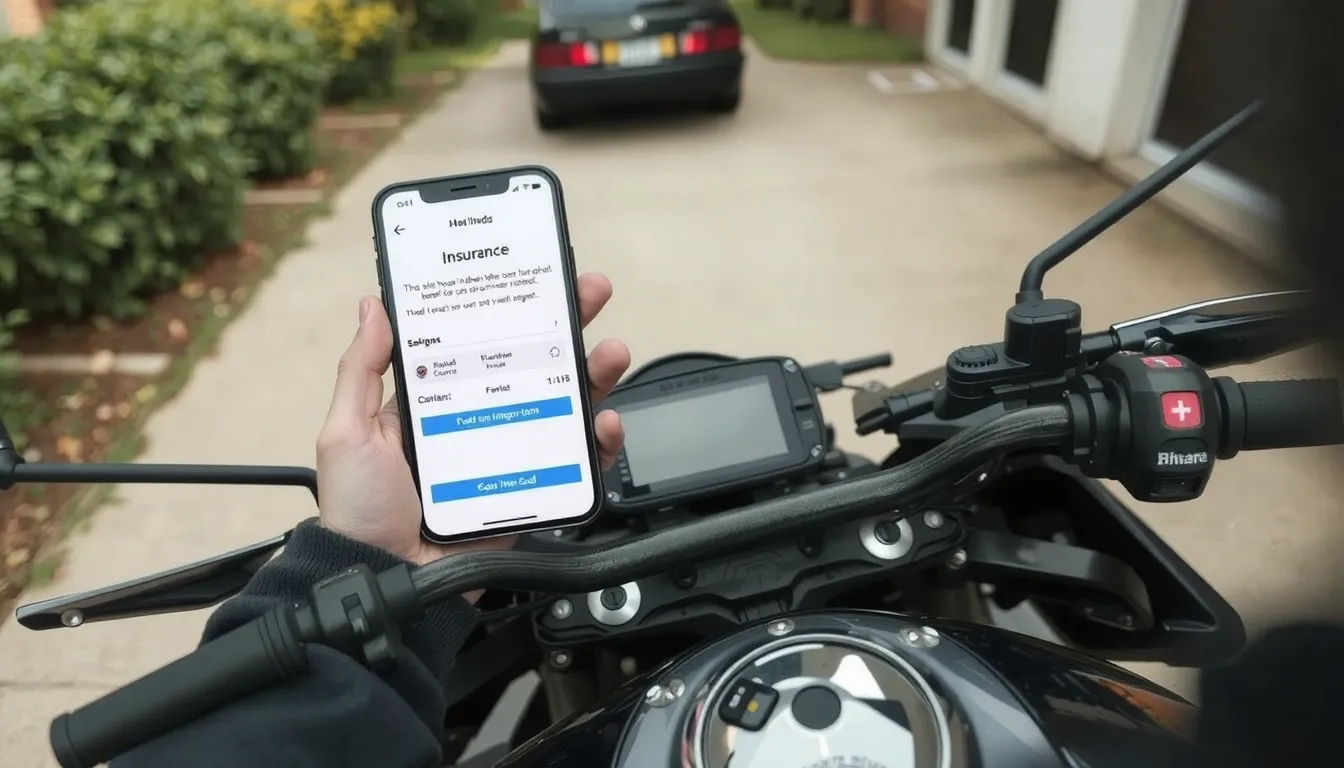
astuces pour réduire votre prime d’assurance
- Garage sécurisé : stationner dans un box fermé réduit le risque de vol et fait baisser la prime.
- Cours de pilotage avancé : les formations BikeSafe ou RoSPA prouvent votre sérieux aux assureurs.
- Paiement annuel privilégié : régler en une fois plutôt qu’au mois supprime les frais de crédit.
- Franchise volontaire augmentée : accepter une franchise plus élevée diminue mécaniquement votre cotisation.
- Kilométrage annuel réduit : déclarer un usage modeste et honnête correspond à un risque moindre pour l’assureur.
- Antivol approuvé ou traceur : un dispositif Thatcham ou un traceur GPS peut vous donner droit à une remise.
Combien coûte une assurance moto en moyenne ?
Les tarifs varient fortement selon votre âge, le type de moto, votre lieu de résidence et votre historique de sinistres. Les données montrent que 51 % des clients ont obtenu un devis inférieur à 523 £. Pour une cylindrée de 125 cm³, la moitié des conducteurs paient moins de 826 £. Les jeunes pilotes de 16 à 17 ans voient leurs primes plafonner à 1 196 £ pour la majorité d’entre eux.
Du côté des bonnes affaires, 10 % des nouveaux clients ont payé 131 £ ou moins pour leur couverture. Parmi ceux qui ont choisi une assurance tous risques, 10 % ont déboursé 256 £ seulement. Ces écarts illustrent l’importance de comparer plusieurs offres avant de souscrire.
Quelles options supplémentaires puis-je ajouter à mon assurance moto ?
| Option supplémentaire | Couverture fournie | Montant ou détail clé |
|---|---|---|
| Protection juridique | Prise en charge des frais d’avocat et de procédure en cas de litige | Jusqu’à 100 000 £ |
| Assistance panne | Remorquage, dépannage sur place ou rapatriement | Service 24/7 disponible |
| Accident corporel | Indemnisation en cas de blessures graves ou de décès | Jusqu’à 21 000 £ |
| Équipement du motard | Protection du casque, blouson, gants et combinaison | Remboursement valeur à neuf |
| Passager (pillion) | Couverture des dommages corporels pour votre passager | Intégré à l’option accident |
| Remplacement moto neuve | Moto identique neuve en cas de perte totale dans les premières années | Valable 2 à 3 ans selon le contrat |
| Extension Europe | Garantie identique lors de vos déplacements sur le continent | Couverture jusqu’à 90 jours |
Chaque option permet d’adapter votre contrat à votre usage réel. Par exemple, si vous roulez toute l’année en toutes saisons, l’assistance panne 24/7 sera précieuse lors d’une panne nocturne loin de chez vous. Pour les motards qui investissent dans un équipement haut de gamme, la garantie casque et cuir évite de supporter seule la facture de remplacement après une chute.
À découvrir aussi
L’assistance et la protection de l’équipement ne s’arrêtent pas à la moto : une assurance accident verse un capital en cas de blessure corporelle soudaine, tandis qu’une assurance habitation couvre incendie, dégâts des eaux et vol.
Certains assureurs proposent des formules pré-assemblées : la couverture tous risques inclut souvent le remplacement de la moto neuve, tandis qu’un contrat au tiers peut être enrichi de la protection juridique pour un coût modéré. Lisez attentivement les plafonds de remboursement : un plafond de 21 000 £ pour l’accident corporel peut être suffisant pour un pilote seul, mais insuffisant si vous transportez régulièrement un passager.
Assurance moto selon le type de deux-roues
La prime d’assurance varie fortement selon le deux-roues. Pour un 50cc, la vitesse maxi est de 45 km/h (28 mph) et l’âge minimum est 16 ans. Ce type de machine coûte généralement moins cher à assurer, même pour un jeune conducteur.
Une 125cc est le choix courant pour passer le CBT. Vous y trouverez une prime plus élevée : 51% des clients paient moins de 826 £. Une moto sportive augmente encore le tarif à cause de sa puissance et de son risque de vol.
À l’inverse, une classique a souvent un usage réduit, ce qui fait baisser la prime. Pour un trike ou un quad, il faut prévoir une assurance spécialisée, car ce sont des véhicules non standard, souvent utilisés hors route.
Comment obtenir un devis d’assurance moto et souscrire ?
- Informations nécessaires : marque, modèle, année et immatriculation de votre moto, ainsi que votre âge, adresse, profession, type de permis et votre historique de sinistres.
- Devis en ligne ou par téléphone : vous pouvez obtenir un devis en quelques minutes sur le site de l’assureur ou appeler un conseiller. Certains assureurs, forts de 96 ans d’expérience dans la protection des motards, proposent une plateforme intuitive.
- Comparer plusieurs offres avant de choisir : n’hésitez pas à solliciter plusieurs devis. Certains prestataires affichent 4/5 sur Trustpilot (basé sur 27 000 avis) et une note 5 étoiles Defaqto, gages de fiabilité.
- Vérifier les garanties incluses et exclusions : lisez attentivement les conditions, notamment la couverture en cas d’accident corporel (jusqu’à 21 000 £), la protection juridique (jusqu’à 100 000 £) et la validité de l’assistance 24h/24 et 7j/7.
- Valider et payer pour finaliser le contrat : choisissez un paiement annuel ou mensuel. Une fois votre police souscrite, vous recevrez vos documents par email sous 24 heures ou par courrier sous 5 jours ouvrés. L’assureur vous enverra un avis de renouvellement 21 jours avant l’échéance.
Questions fréquentes sur l’assurance moto
L’assurance moto est-elle vraiment trop chère ?
Non, le tarif dépend de votre profil et de votre couverture. Pour un jeune conducteur ou une moto sportive, la prime peut être élevée, mais une assurance au tiers coûte souvent moins de 30 euros par mois. Comparer les offres permet de trouver un prix adapté à votre budget.
Que risque-t-on à rouler sans assurance ?
Les sanctions sont lourdes : une amende forfaitaire de 3 750 euros, une suspension ou annulation du permis, l’immobilisation et la confiscation du véhicule. En cas d’accident, vous devez rembourser intégralement les dommages causés aux tiers, ce qui peut représenter des milliers d’euros.
Quel permis pour quelle moto selon l’âge ?
Le permis A2 est accessible dès 18 ans pour les motos de moins de 35 kW. Le permis A, pour les modèles plus puissants, s’obtient à 24 ans ou après deux ans de conduite en A2. Le BSR ou le permis B avec formation de 7 heures sont réservés aux cyclomoteurs dès 14 ou 16 ans.